A great lawn doesn't happen by chance — it starts with the right foundation. And in Elizabeth, CO, that foundation is often buried under a layer of dead organic material called thatch. Scarifying, or power raking, is the process of removing that layer so your grass can actually breathe, drink, and grow.
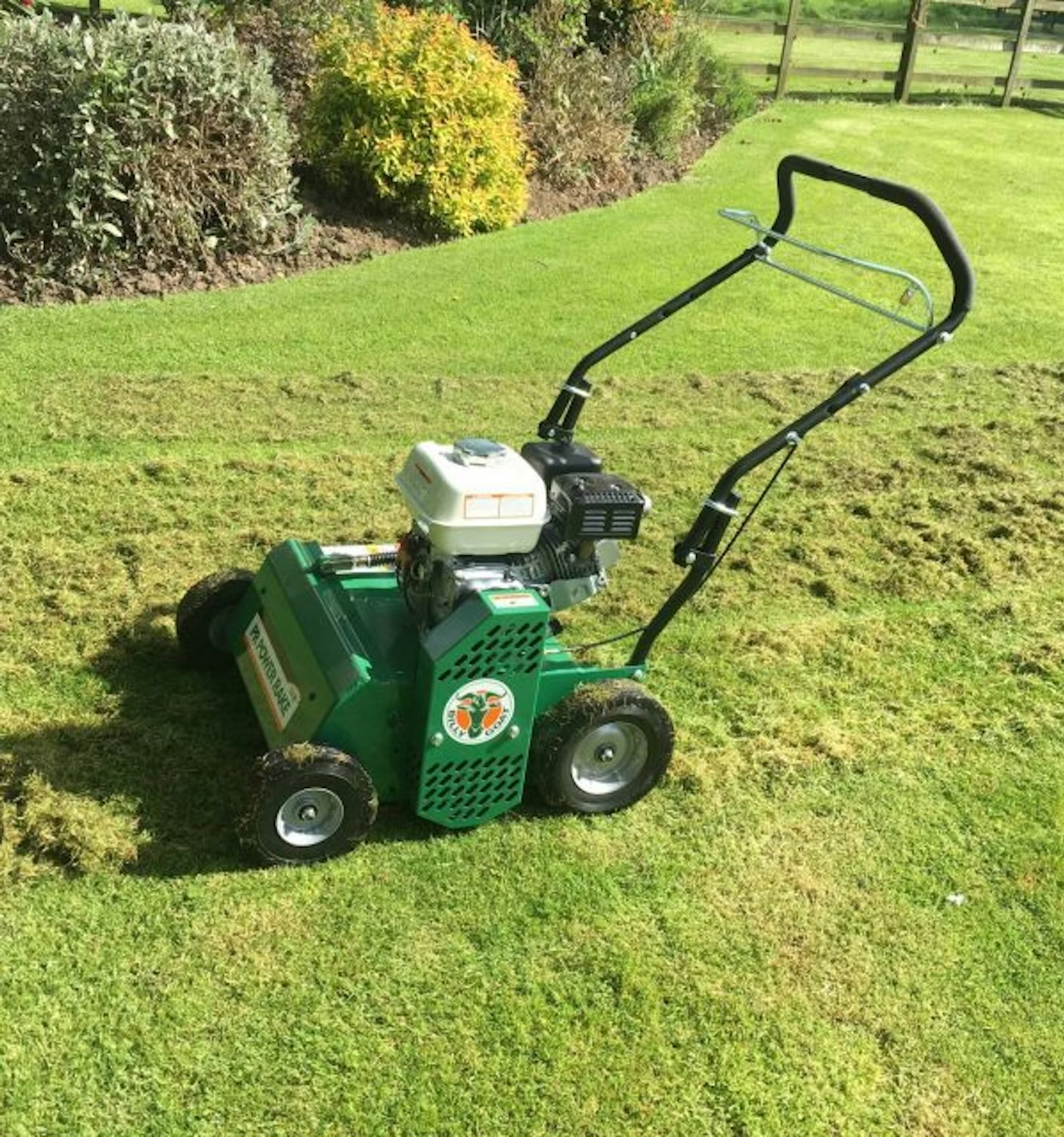
What Is Thatch, and Why Should You Care?
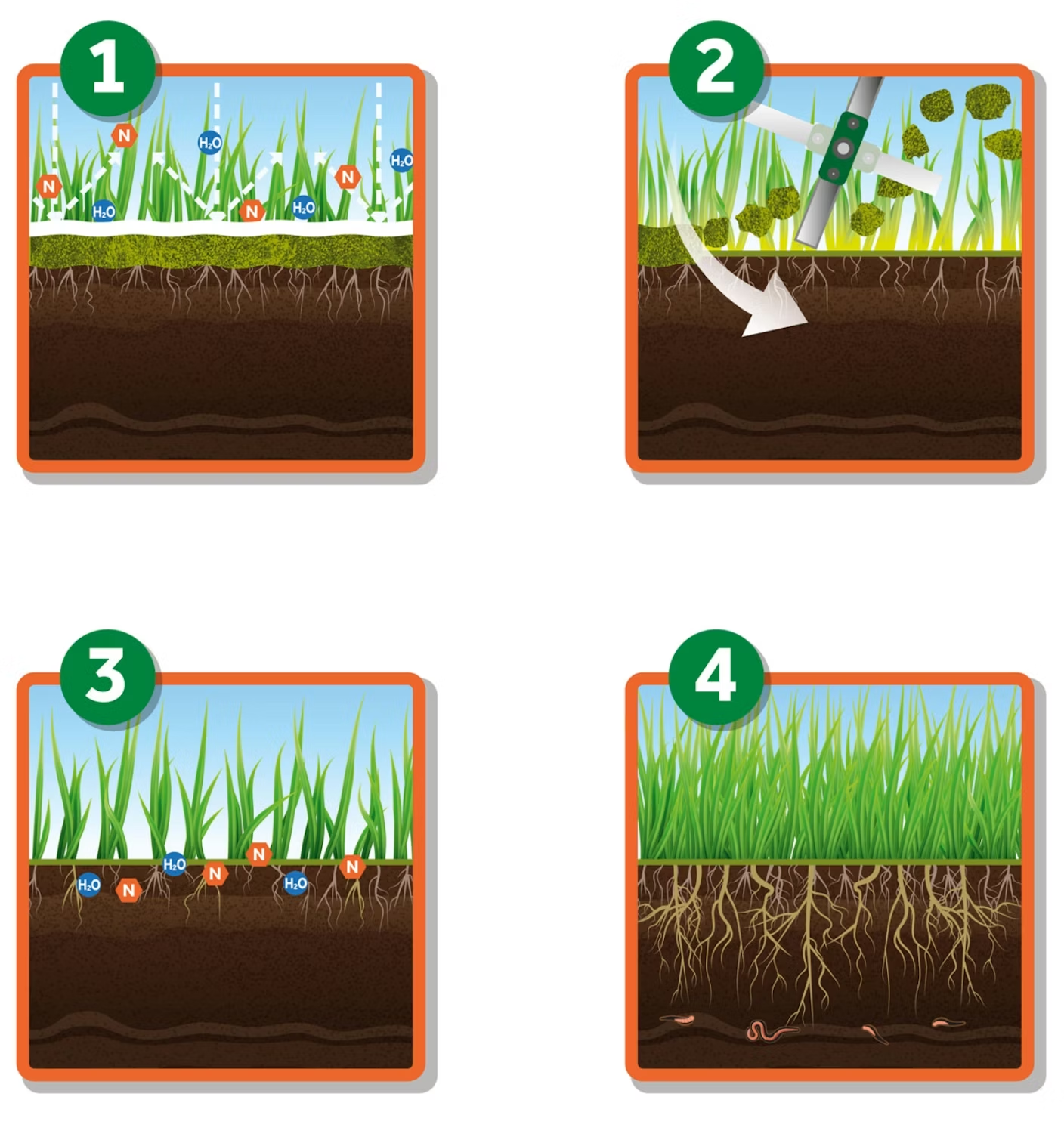
Thatch is the spongy layer of old leaves, clippings, stems, roots, and other organic material that accumulates between the grass blades and the soil surface. A thin layer — around half an inch — is actually beneficial, acting as a light insulator and moisture buffer.
The problem starts when thatch builds up beyond that. At Elizabeth's altitude, cooler temperatures and dense clay soil slow the microbial decomposition that naturally breaks thatch down. The result is a thick mat that:
- 🚫 Blocks water and nutrients from reaching the root zone
- 🚫 Creates a breeding ground for pests and fungal disease by trapping moisture against the crown
- 🚫 Weakens grass by forcing shallow root growth where moisture is trapped above the soil line
- 🚫 Makes aeration less effective — tines can't drive as deep when they have to punch through a thick mat first
If your lawn feels spongy underfoot, or if you can see a visible brown layer when you pull back the grass, you've got a thatch problem worth addressing.
What Causes Thatch to Build Up?
Thatch isn't just a neglect problem — it can happen to well-maintained lawns too. Common causes include:
Over-fertilizing
Too much nitrogen pushes fast, leafy growth — more than the soil's microbial activity can break down. The organic material piles up faster than it decomposes.
Compacted or clay-heavy soil
Elbert County's dense clay limits microbial activity and drainage — both critical for natural thatch breakdown. This is one reason Colorado lawns are more thatch-prone than lower-elevation, sandier-soil yards.
Infrequent dethatching
Once the layer gets thick, it becomes self-reinforcing — less air and water reaches the soil, microbial activity drops further, and the mat grows faster than it breaks down.
Grass species
Kentucky bluegrass — common in Elizabeth — is a moderate thatch producer. Fine fescue tends to be worse. If you don't know your grass type, check with your local extension office or just call us.
Dethatching vs. Power Raking vs. Scarifying: What's the Difference?
These three terms get used interchangeably, but they're not quite the same thing. They're all aimed at removing thatch, but the mechanism and aggressiveness differ. Here's how to think about them:
Dethatching: the gentle version
Uses spring tines, similar to a powered rake, that flick across the surface and lift light debris. Good for lawns with mild thatch buildup where you just want to open things up a bit. Least stressful on the lawn.
Power raking: the aggressive version
Uses rotating flail blades that aggressively lift thick mats of organic material. This is what you need when a lawn hasn't been maintained and has a seriously choking thatch layer. More disruptive than dethatching, but that's the point.
Scarifying: the renovator
Uses vertical solid blades that cut actual slits into the soil, not just the thatch layer. This stimulates more vigorous growth but leaves the lawn looking beat up for longer. It's used for major lawn overhauls or grass types like fine fescue that build heavy thatch deep into the crown.
The short version: dethatching is a light surface clean, power raking is a serious thatch removal, and scarifying is a full renovation that cuts into the soil itself. Most Elizabeth lawns that haven't been maintained in a few years need power raking, not just dethatching. True scarification is less common and typically reserved for problem lawns.
When you see "scarifying" on the Billy Goat website and other European equipment brands, they're often using it as a general term that covers what we'd call power raking here. The Billy Goat PR Series we run uses flail blades, which puts it in the power rake category.
How We Do It: Dethatch Then Vacuum
Here's where most lawn care crews cut corners: they power rake and leave. The loosened thatch just sits on top of the lawn, and half of it settles back down. That's not how we work.
Power rake the full lawn
We run the Billy Goat PR Series dethatcher across the lawn in overlapping passes. The flail blades slice through the mat and lift the dead material to the surface. You'll see a lot come up — that's the point.
Vacuum with the Billy Goat KV601SP
After every power rake pass, we follow with our commercial lawn vacuum. The KV601SP's 5-blade serrated impeller shreds debris as it suctions — it picks up everything the dethatcher loosened and hauls it into a 151-liter bag. Nothing gets left on the lawn to resettle.
Haul everything away
We load the debris and remove it. You're not left with piles to deal with. The lawn is clear, open, and ready for the next step — usually aeration, overseeding, or fertilizer.
Why the vacuum step matters:
Power raking without vacuuming is like scrubbing a floor and leaving the dirt pile in the middle of the room. The dethatch + vacuum combination is what actually removes the thatch layer — not just stirs it up. It's the step most crews skip because it takes more time and equipment. We don't skip it.
When to Scarify in Colorado
Timing matters — and Colorado's climate adds a wrinkle. The general guidance from Billy Goat is early spring or autumn, giving the lawn 4–6 weeks to recover before either summer heat or winter dormancy. That maps well to Elizabeth, with some specifics:
Spring — Late April to Mid-May ✓ Recommended
Once the ground has thawed and overnight temps are consistently above 40°F. This is the primary window for Elizabeth. The lawn is coming out of dormancy, which means it'll recover and fill in fast after the thatch is gone. Pair it with aeration and you're set up for a strong summer.
Fall — September to Early October ✓ Also good
A fall scarify gives the lawn a clean slate before winter dormancy. Combine with fall aeration and overseeding for the best results — the open soil surface after dethatching gives seed excellent contact. Don't go too late: Elizabeth's first hard freeze typically hits in October, and the lawn needs a few weeks to recover before going dormant.
Mid-summer or mid-winter — avoid
Scarifying during summer heat stress or winter dormancy doesn't give the lawn time to recover. Wait for a shoulder season window.
What to Expect After Power Raking
Your lawn is going to look rough immediately after. That's normal, and it's not a sign anything went wrong — it's exactly what's supposed to happen.
As Billy Goat notes in their scarifying guide: "Immediately after scarifying, lawns may look thin or bare. This is normal." The stressed, dead material has been removed. What you're seeing is what was actually there underneath the thatch mat.
Recovery depends on the time of year and whether you overseed. Typical timeline:
- Week 1–2: Lawn looks rough, sparse. Don't panic.
- Week 2–4: New growth starts pushing through, especially if you watered and fertilized.
- Month 2–3: Noticeably thicker, greener lawn. Better drought and disease resistance.
Tips for a Successful Scarifying Session
Mow short before you start. Drop the mow height a notch below your normal setting the day before. This gives the flails better access to the thatch layer without fighting through long grass.
Don't scarify wet ground. Wet Colorado clay compacts easily. Wait for the lawn to dry after rain or irrigation before dethatching.
Follow up with aeration. With the thatch gone, aerator tines drive deeper and produce better core depth. Power rake + aerate in one visit is our most popular combo for a reason.
Overseed immediately after. The exposed soil surface is ideal for seed-to-soil contact. Don't wait — seed the same day if possible.
Water consistently after the job. Keep the soil moist for 2–3 weeks post-treatment. This supports recovery and, if you overseeded, germination.
The Equipment We Use
We run the Billy Goat PR Series power rake and follow up with the Billy Goat KV601SP self-propelled lawn vacuum. Billy Goat is the professional standard for this work — their machines are built heavier than homeowner equipment, with vibration-absorbing steel frames and heat-treated flail blades that last.
You can read more about their approach to scarification on the Billy Goat blog — their "ABC of Lawn Care" series is genuinely worth a read if you want to go deep on lawn science.
Book a Power Rake + Vacuum in Elizabeth, CO
We dethatch and vacuum — the full job, not just half of it. Serving Elizabeth, Parker, Franktown, and Elbert County. Free quotes.
Get a Free QuoteFrequently Asked Questions
Should I aerate or scarify first?
Scarify first if you have significant thatch. With the dead layer removed, aeration tines drive deeper and the holes stay open — you get more out of both treatments.
Will power raking damage my lawn?
It will look rough for a week or two: thin, patchy, and bare in spots. That's completely normal. You're removing dead material, so what's left looks sparse at first. Recovery typically takes 3 to 6 weeks, and the lawn comes back thicker and healthier.
How often should I power rake?
Once a year is right for most Elizabeth lawns — spring is the most common window. If you have a heavy thatch problem the first time, you may want to do it two years in a row to fully reset the lawn, then move to annual maintenance.
Can I power rake and overseed the same day?
Yes — and it's the ideal combination. The open soil surface after dethatching and vacuuming gives seed excellent contact with the ground. Overseed immediately after, water consistently, and you'll see significantly better germination rates than overseeding on an untreated lawn.
Is power raking the same as dethatching?
Similar, but not identical. Dethatching uses spring tines for a lighter surface pass. Power raking uses rotating flail blades and is more aggressive, suited for lawns with serious thatch buildup. Scarifying goes deepest, using solid vertical blades that cut into the soil. Most neglected lawns need power raking. Light maintenance is dethatching. Full renovation is scarifying.